Bedroom planning · Sleep comfort
Choosing an Adjustable Bed: Features, Fit, and Bedroom Planning
An adjustable bed is less a piece of bedroom machinery than an invitation to rethink how a bed can serve the day. With the head or foot raised at the touch of a button, the familiar flat surface becomes a place to read, unwind, rest, and sleep in a position that feels more personal. The best choice is not necessarily the frame with the longest feature list. It is the one that suits your routines, works with your mattress, and moves comfortably within the room you have.
From articulation and controls to measurements, bedding, and everyday use, a considered approach makes the difference between an appealing idea and a frame that genuinely belongs in your home. This guide offers a practical route through the details, with room planning and compatibility given the same attention as comfort.
What an adjustable bed actually does
An adjustable bed frame changes the angle of one or more sections of the sleeping surface. Most commonly, the upper section lifts to support the head and shoulders, while the lower section raises the legs. The movement is powered, usually through a wired or wireless remote. Some models allow the head and foot to move independently; others provide a smaller selection of preset positions.
That adjustability can make ordinary moments more comfortable. A raised head may feel more natural for reading or watching a programme, while lifting the legs can provide a change of posture after a long day on your feet. A flat setting remains available for sleeping, and some frames include a gentle, preconfigured position intended for relaxation. These are comfort options, not medical treatment: anyone seeking advice for a health concern should speak with a qualified healthcare professional.
It helps to distinguish an adjustable base from an adjustable mattress. The base is the moving support beneath the mattress; the mattress must be flexible enough to follow its contours without damage or loss of support. Together, the two form a system. Selecting one without checking the other can create a mismatch, even when each seems suitable on its own.
Begin with your daily routine
Before comparing controls or technical specifications, picture how the bed might be used over the course of an ordinary week. Do you like to sit up to read before sleep? Would a raised head position make breakfast in bed or a quiet morning more inviting? Do you share the bed with someone who prefers a different position? Is the frame intended mainly for sleeping, or will it also be a regular place to relax?
These questions help separate useful features from decorative complexity. A feature may sound impressive in a product description but add little if it does not fit your habits. Conversely, a simple independent head-and-foot adjustment can be valuable if you expect to change positions often. Think in terms of tasks and occasions rather than the number of functions on a specification sheet.
- For reading: Consider how smoothly the head section rises and whether the mattress maintains comfortable support at an incline.
- For varied relaxation: Independent head and foot movement offers more ways to fine-tune a position than a single preset angle.
- For shared use: Ask whether the bed is one continuous surface or two separately adjustable sides, and consider how each arrangement affects closeness and movement.
- For straightforward operation: Prioritise a clear remote and easy-to-understand controls over a menu of rarely used settings.
A short list of real needs gives the comparison process a sharper outline. It also keeps the purchase grounded in the experience you want to create, rather than in features that may be exciting in a showroom and forgotten at home.
Head and foot articulation
Articulation describes which parts of the frame move and how they move. The most familiar design raises the head and foot independently, allowing you to lift the upper body, elevate the legs, or combine both actions. Other models may offer a more limited adjustment, so check the movement range and whether the sections operate separately.
Greater range is not automatically better. The angles you are likely to use matter more than an abstract maximum. A dramatic incline may look striking in a demonstration, yet a modest lift could be all that feels natural for reading. If possible, test the frame in person with a mattress of a similar type and thickness to the one you intend to use. Notice whether you feel stable, whether the surface shifts, and whether the transition between positions is smooth.
Ask how the platform supports the mattress as it bends. A properly matched adjustable mattress should flex with the base while remaining secure. The frame may use a retainer bar, straps, or another method to reduce sliding. Confirm what is included and whether it is suitable for the mattress dimensions. If you already own a mattress, consult both its manufacturer’s guidance and the adjustable-base documentation before committing.
Also consider what happens when the bed returns to flat. The transition should feel predictable, and the base should settle without awkward jolts or excessive noise. These details are easy to overlook during a quick demonstration, but they become part of the nightly experience.
Remote controls and position settings
A remote control is the frame’s everyday interface, so its design deserves more attention than its place in the feature list might suggest. Buttons should be legible and logically arranged. It should be easy to tell which control raises the head, which lowers the foot, and how to return to a flat position. If the remote is wireless, check how it is powered and how replacement or charging works.
Some adjustable beds offer memory settings that let a user save preferred positions. Others include presets, such as a neutral resting posture or a position intended for reading. These functions may be convenient, but they are only worthwhile if they are intuitive and genuinely useful. Ask whether a preset can be changed, how many positions can be saved, and whether each side of a split bed can store its own settings.
Additional features can include under-bed lighting, massage functions, or connectivity through a mobile application. Think carefully about whether these options support the routine you want. A soft light may be helpful when getting up at night, while an app could be useful for a particular household; neither should distract from the more fundamental questions of fit, stability, and mattress compatibility.
When two people share a bed, investigate the controls together. Can each person operate their own side? Is the handset easy to keep within reach? If the system depends on an app, does each user need an account or a particular device? Small practical questions like these can have an outsized effect on whether a feature feels effortless or needlessly complicated.
Check mattress compatibility before you buy
Compatibility is one of the most important details in choosing an adjustable bed. A mattress designed for a fixed platform may not bend as intended, and some constructions may be unsuitable for repeated flexing. The answer depends on the particular mattress and base, not just on a broad label such as foam, latex, or springs. Confirm the exact model’s guidance rather than assuming that all mattresses of one type behave alike.
Ask the retailer or manufacturer to verify that the mattress is approved for the chosen adjustable frame. Check size, thickness, weight, and any limits on bending. If you are keeping an existing mattress, look for written compatibility information from its maker. A verbal assurance may be useful, but written specifications make it easier to resolve uncertainty before delivery.
Consider the complete setup, not only the mattress. A mattress protector, topper, or other surface layer needs enough flexibility to follow the bed’s movement and remain in place. Deep, heavily structured accessories may shift, wrinkle, or interfere with articulation. Fitted sheets should have a pocket depth appropriate to the combined mattress and any layer placed on top, while their fabric and elastic should allow the surface to bend without pulling loose.
There is no universal bedding rule for every adjustable frame. Check the care and fit instructions for each item, and ask how accessories are expected to behave at the maximum angle you plan to use. A neatly made bed should still look composed after adjustment, but practical security matters more than a perfectly smooth appearance.
Measure the bedroom, not just the bed
In a bedroom, a bed is both the central object and a piece of moving furniture. A frame’s listed footprint tells only part of the story. Before ordering, measure the room and mark the bed’s intended position. Include the full width and length of the base, the mattress, and any headboard or footboard. Then consider how the frame will move and how people will circulate around it.
Leave space on both sides if the bed is shared, and preserve a practical route to the door, wardrobe, and windows. A bedside table that fits beside a flat bed may become awkward if it blocks access to a control, catches a moving component, or prevents a user from getting in and out comfortably. Check drawers, doors, radiators, lamps, and other nearby furniture for possible collisions.
Some frames change their effective position as the head or foot rises. Depending on the design, the mattress may shift, extend, or move relative to the wall. Ask the manufacturer how much clearance is required behind and around the base, and whether the frame is designed to stand against a wall. Do not assume that a bed can be pushed tightly into place simply because the flat footprint fits.
Remember the route into the room, too. Measure doorways, corridors, staircases, lifts, and tight turns before delivery. An adjustable base may arrive in sections, but this varies by model. Confirm the delivery format and whether assembly is included. If the bedroom is upstairs or access is restricted, provide those details in advance rather than discovering a problem on delivery day.
A planning checklist for the room
A careful measure takes only a little time and can prevent a costly mismatch. Record dimensions in one place, and, if helpful, use masking tape to outline the bed footprint on the floor. This makes proportions easier to judge than a number on a page.
- Measure the room’s length and width, including alcoves or sloping sections that affect usable space.
- Measure the proposed bed footprint, including any headboard, side rails, or protruding controls.
- Allow for walking space on the sides and at the foot, based on how the room is used.
- Check the movement clearance required by the manufacturer, especially near walls and bedside furniture.
- Identify nearby outlets and plan a safe route for the power cable that does not cross a walkway.
- Measure doors, hallways, stairs, and lifts along the delivery route.
- Check that wardrobes, drawers, curtains, and doors remain accessible when the bed is in use.
In smaller bedrooms, a restrained layout often feels more generous than squeezing in every familiar piece of furniture. Consider whether a bulky bedside table can be replaced with a narrower shelf, or whether a floor lamp can move to a different corner. Keep the route around the bed clear and let the frame’s function, rather than decorative excess, set the room’s rhythm.
Power, noise, and practical details
An adjustable base needs a power source, so inspect the location of outlets before selecting the final position. Follow the manufacturer’s instructions for electrical connection and cable management. A cord should not be stretched taut, trapped under a moving part, or left where someone could trip. If the existing outlet is inconvenient, speak with a qualified electrician about suitable options rather than relying on improvised extensions.
Listen to the motor if you can test the frame. A brief demonstration can reveal whether its sound is likely to disturb a light sleeper or a partner. Noise can vary by model, load, and installation, so ask about normal operation and any maintenance requirements. Smooth movement and a stable base are worth prioritising over a long list of secondary functions.
Review the warranty carefully. Determine what is covered, for how long, and whether coverage differs between the motor, electronics, frame, and upholstery. Clarify who handles service and what happens if the bed needs repair. For readers buying in Sweden, check the seller’s delivery terms and applicable consumer information for the specific purchase; do not assume that warranty coverage, return conditions, or delivery arrangements are identical across retailers.
It is also sensible to ask about the frame’s weight, assembly, and any recommended maintenance. A bed that is difficult to move or service can affect future room changes. Clear answers at the point of purchase make the decision more transparent and help avoid surprises after installation.
Choosing a size and configuration
Start with the size that works for the room and the people using it. A larger sleeping surface can offer more space, but it also takes up more floor area and may complicate delivery. Match the base dimensions to the mattress dimensions precisely, including the region’s standard sizing conventions. Names such as double, queen, or king can refer to different measurements depending on the market, so compare centimetres rather than relying on a label.
For couples, a single wide mattress on one adjustable base may move both sleepers together. A split configuration can let each side adjust independently, though it may create a seam or a different feel at the centre. Consider how you sleep together, how frequently you expect to adjust positions, and whether each person wants the same degree of movement. Test the arrangement if possible, and ask how sheets and other bedding fit the chosen configuration.
Children, pets, and visitors may also influence the decision. Think about the stability of the frame, access to moving components, and any manufacturer guidance on safe use. Keep the operating instructions available and ensure everyone who may use the bed knows how to control it. The aim is a comfortable, manageable piece of furniture, not a mechanism that becomes mysterious after installation.
Style, proportion, and the finished bedroom
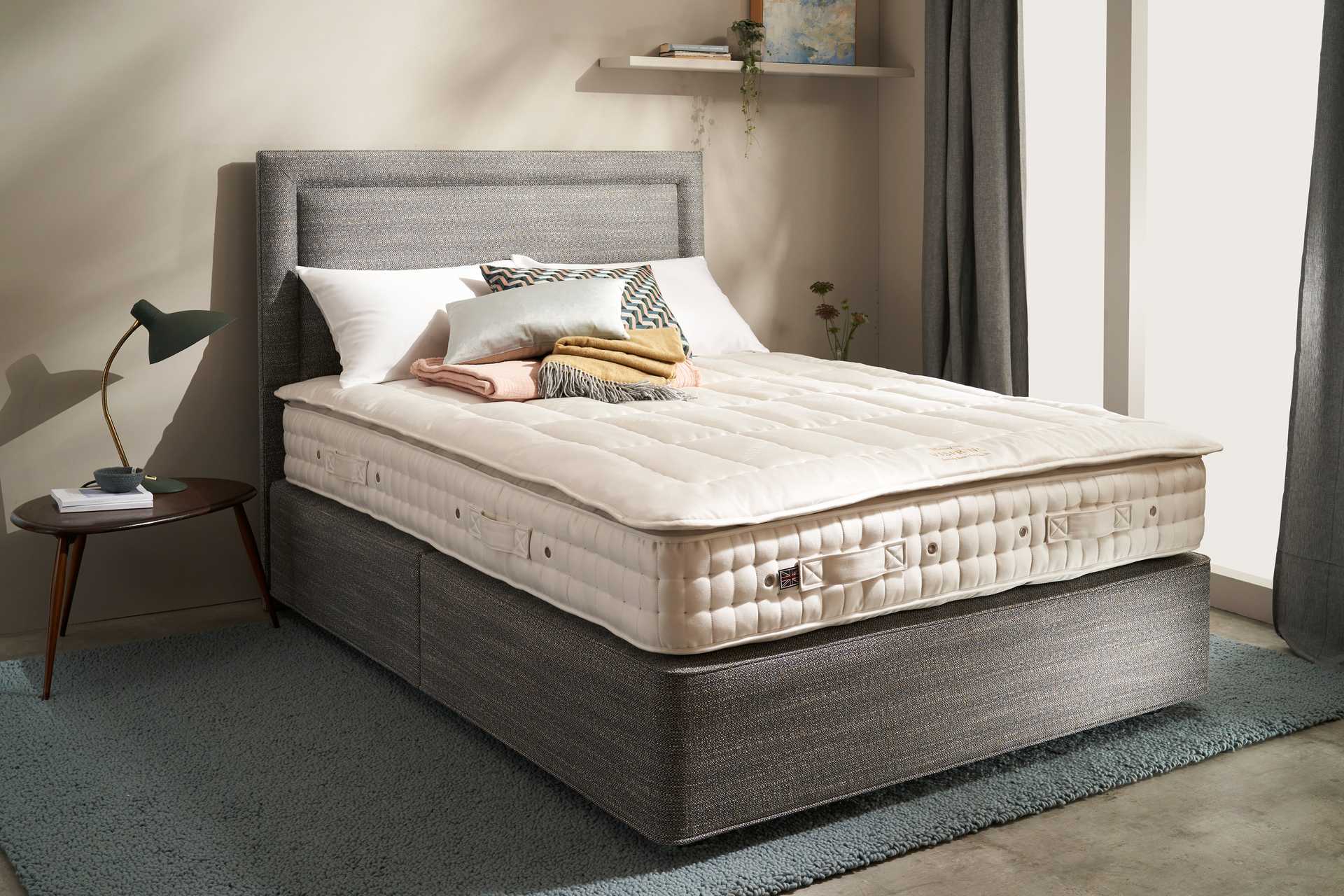
Technology need not dictate the look of the room. Adjustable beds range from discreet, low-profile bases to more substantial designs. Consider how the frame’s height relates to the bedside tables, the visual weight of the headboard, and the amount of space beneath the bed. A clean-lined base can sit quietly within a pared-back bedroom, while a more prominent headboard can give the room a composed focal point.
Check whether a headboard is included, optional, or incompatible with certain base designs. Some adjustable frames may require a particular attachment method or additional brackets. If you already own a headboard, confirm its dimensions and mounting requirements before purchase. The same care applies to bed skirts and decorative coverings: a fabric that hangs too low may interfere with movement or conceal access to the base.
In a Nordic-inspired interior, simplicity is most successful when it is also practical. Choose a restrained palette, breathable bedding, and furniture that leaves the room easy to navigate. Keep cables discreet but accessible, and allow the adjustable frame to move freely. The result can feel calm and considered without disguising the functional purpose of the bed.
Questions to ask before ordering
A concise conversation with the retailer can answer the points that are hardest to infer from a product page. Bring your measurements, mattress details, and a short list of the positions you expect to use. Ask direct questions and request written confirmation where compatibility or clearance is important.
- Can this exact mattress be used with this exact adjustable base?
- What are the base’s dimensions, movement range, and required wall clearance?
- Does the frame adjust at the head and foot independently?
- What controls are included, and are presets or memory positions available?
- How is the mattress kept in place when the frame is elevated?
- Which sheets, protectors, or toppers are recommended for this setup?
- What is included in delivery and assembly, and what access details should be provided?
- How are the motor, electronics, and frame covered by the warranty?
Answers should be specific rather than general. “Most mattresses fit” is not as reassuring as written confirmation for the model you own. Similarly, a room measurement is useful only when it includes operating clearance and the route for delivery.
Common selection mistakes
One common mistake is choosing the most feature-rich model by default. More settings do not necessarily mean more comfort, especially if the controls are confusing or the positions do not match your routine. Another is assuming that an existing mattress will work because it feels comfortable on a fixed bed. Flexibility and compatibility need to be confirmed separately.
It is also easy to measure only the bed itself and overlook movement clearance, doors, bedside furniture, or the delivery route. A final oversight is treating bedding as an afterthought. Sheets that are too shallow, layers that slide, or accessories that resist bending can undermine an otherwise well-chosen frame. Review the entire sleep setup together, from the base to the top layer.
Finally, avoid relying on a showroom position as the sole test. Spend time considering how you will use the bed at home, where the remote will live, how the frame will be powered, and what will happen when the bed is flat. The most useful purchase is usually the one that makes familiar routines feel easier without demanding attention from them.
A more considered way to choose
Choosing an adjustable bed is a matter of coordination: comfort with mechanics, mattress with base, and furniture with room. Begin with the positions and routines that matter to you. Compare head and foot articulation, assess the clarity of the remote, and check which settings are genuinely useful. Verify mattress and bedding compatibility before you place an order.
Then plan the bedroom with the frame in motion, not only at rest. Measure the footprint and required clearance, consider power and cable placement, and make sure delivery is possible. Ask about assembly, warranty coverage, and ongoing support. These practical details may lack the glamour of a sculptural headboard, but they are what allow a bed to feel effortless once it becomes part of daily life.
A well-chosen adjustable bed should suit the way you live rather than ask you to reorganise your life around it. When the features are purposeful, the fit is confirmed, and the room is thoughtfully prepared, the result is a more versatile setting for rest—one that feels at home in both the quiet of night and the slower rituals of the day.
Frequently asked questions
Can I use my current mattress on an adjustable bed?
Possibly, but compatibility depends on the exact mattress and base. Check the mattress manufacturer’s guidance and the frame specifications before buying. Do not assume that a mattress will bend safely just because it is comfortable or relatively flexible.
Do all adjustable beds raise both the head and the feet?
No. Some raise both sections independently, while other designs offer fewer adjustments. Confirm the movement range and controls for the model you are considering, and choose the configuration that matches your intended use.
How much space should I leave around an adjustable bed?
There is no single clearance figure that applies to every frame. Follow the manufacturer’s requirements, then allow additional practical room for walking, bedside furniture, and access. Check whether the bed shifts as it moves and whether nearby walls or objects could be affected.
Will ordinary fitted sheets work?
They may, if their dimensions and stretch suit the mattress and the frame’s movement. Check pocket depth, elastic, and the combined height of the mattress and any topper or protector. Follow the bedding maker’s care and fit instructions.